


October 06, 2026
August 25, 2026
How to Create a Calm After-School Routine: A Montessori-Inspired Guide
If the hours between the school bell ringing and bedtime routinely feel overwhelming, you are not alone.
For many families, the transition from the structured environment of school to the unstructured environment of home is fraught with tension. Backpacks are flung across the foyer, shoes are abandoned in the middle of the hallway, and minor requests are met with major meltdowns. This phenomenon is so common it even has a name: "after-school restraint collapse." Children hold it together all day, following rules and managing social dynamics, only to completely unravel the second they are safely back with the people they love most.
As parents, our instinct is often to manage the chaos by stepping in, taking over, and orchestrating every moment. But what if the secret to a calm after-school routine wasn't doing more for your child, but teaching them to do more for themselves?
Drawing on the principles of the Montessori method, we can transform the afternoon transition from a daily battleground into a peaceful, empowering, and restorative part of the day. Here is how to create a Montessori-inspired after-school routine that fosters independence, emotional regulation, and connection.
The Montessori philosophy of transitions
In a Montessori classroom, the environment is intentionally prepared to foster autonomy. Children choose their work, manage their personal care, and tidy up after themselves — not because they are forced to, but because the space invites them to do so with dignity and ease.
When applied to the home, the Montessori approach shifts our perspective on the after-school hours. Instead of viewing the afternoon as a logistical hurdle to clear (homework, snacks, dinner, bath, bed), we view it as an opportunity for the child to practice self-regulation and independence.
A successful Montessori after-school routine rests on three foundational pillars:
- Prepared environment: Setting up spaces at the child's eye level so they can navigate independently.
- Rhythm over rigid schedules: Creating a predictable flow of events rather than watching the clock.
- Prepared adult: Regulating our own nervous systems first so we can hold space for our child's decompression.
Step 1: Pause and decompress (the "brain break")
Before you ask about their day, before you check the backpack for notices, and before you dive into homework or extracurriculars, your child needs a transition period.

After-school meltdowns are almost always a symptom of sensory overload and fatigue. In Montessori, we respect the child's need for concentration and rest.
- Offer a quiet landing space: Create a cozy nook with a few floor pillows, soft lighting, and perhaps a basket of comforting books or quiet wooden toys that encourage tactile grounding.
- Encourage independent play or quiet time: Resist the urge to pepper your child with questions the moment they walk through the door. Give them 15 to 20 minutes of unstructured, low-stimulation time.
- The power of nature: If possible, spend 10 minutes outside. Fresh air and green spaces are clinically proven to lower cortisol levels in both adults and children. The Bug Observation and Collection Kit and the Montessori Outdoor Adventure Set turn a quick trip outside into a genuine nature exploration that children will want to do every afternoon.
Step 2: Set up a child-sized "landing zone"
In traditional households, the entryway is a chaotic pile of adult-sized expectations, hooks that are too high to reach, shoes kicked into heaps, and lunchboxes left on the kitchen island.
To foster independence, redesign your entryway from the child's perspective. A functional after-school routine starts the second your child steps through the door.
- Lower the hooks: Install hooks at your child's eye level so they can hang up their own backpack and jacket.
- Create a shoe and bag station: Use a low shelf or a dedicated basket where shoes belong. When children have a specific, accessible place for their belongings, they are far more likely to use it.
- Add a small bench: Provide a child-sized bench or stool so they can sit down to take off their shoes independently without losing their balance or asking for help.
When children manage their own belongings, they feel a sense of competence and ownership over their transition into the home.
Step 3: Fuel the brain with a mindful snack station
Hanger (hunger-induced anger) is real. After hours of mental exertion, children need sustained energy to regulate their emotions for the rest of the day. However, standard after-school snacks are often loaded with refined sugars that lead to a spike and a subsequent crash, fueling even more behavioral challenges.
In Montessori, practical life skills include food preparation. You can harness this by setting up an independent snack station.
- The low-shelf refrigerator: Clear a designated shelf in your fridge or pantry at your child's height. Stock it with pre-portioned, healthy options: sliced apples, cheese cubes, hard-boiled eggs, or whole-grain crackers.
- Child-safe tools: Provide a small pitcher of water, a glass cup, and a small cutting board with a dull, child-safe knife so they can prepare their own snack. The Real Kids Kitchen and Baking Set and the Green Wooden Kitchen Appliance Pretend Play Set build exactly the hand skills and confidence children need to manage their own food preparation independently.
- Mindful eating: Encourage your child to sit at a small table to eat their snack mindfully, rather than eating on the run or in front of a screen. This acts as a physical anchor, signaling to the brain that they have arrived home and are safe.
Step 4: Streamline homework and activities with predictable rhythms
For older children, the afternoon often brings the added pressure of homework. While homework is a reality for many families, the way we approach it can make or break the evening calm.
- Establish a rhythm, not a checklist: Young children thrive on rhythm because it provides emotional safety. A predictable flow — Arrive, Decompress and Snack, Connection, Focus Time — feels much less daunting than a rigid schedule dictated by the clock.
- Prepare the workspace: Create a dedicated, clutter-free workspace stocked with pencils, paper, and organizers. Let your child choose when they want to do their homework within a designated window of time, giving them a healthy sense of control.
- Connect before you correct: If your child struggles with homework resistance, it is rarely about the math problem itself. It is usually a bid for connection. Spend 5 minutes truly connecting, listening to a story about their day, or playing a quick game before asking them to focus on academic tasks.
Step 5: Invite independent play and open-ended exploration
Once the initial transition is complete and energy levels are restored, children often hit a wave of afternoon restlessness. Instead of turning to screens to fill the gap, which can overstimulate the nervous system and make bedtime battles worse, encourage independent play.
This is where thoughtfully chosen Montessori toys and open-ended materials shine. Unlike battery-operated toys with a single predetermined outcome, open-ended toys invite children to use their imagination, problem-solve, and enter a state of deep, focused play (what Montessori educators call "normalization").
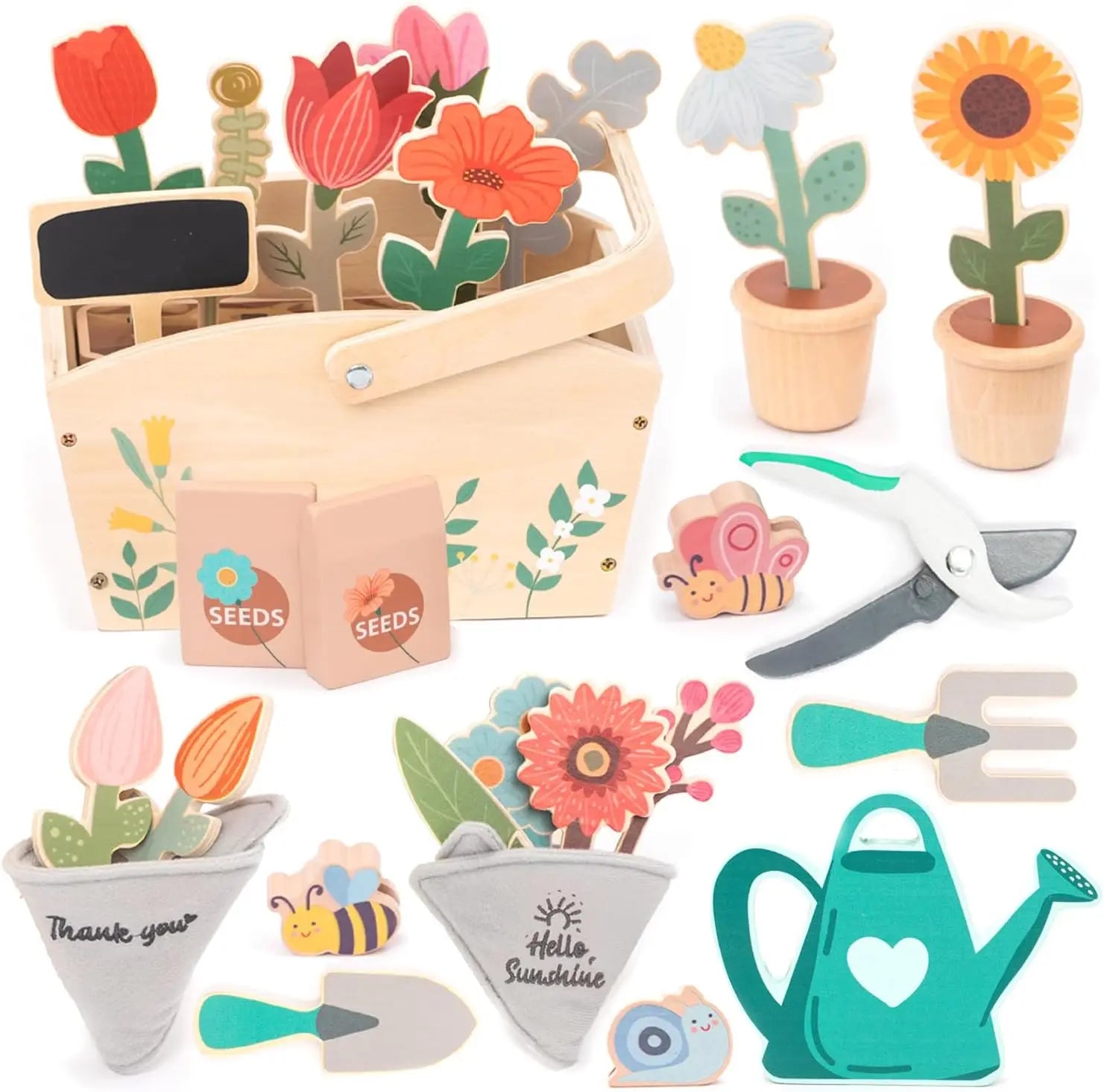
For outdoor play, the Wooden Picnic Basket Pretend Play Set and the Wooden BBQ Skewer Pretend Play Set are wonderful for children who love to role-play and create outdoor scenarios. The Wooden Garden Play Set invites slow, focused outdoor engagement, and the Wooden Archery and Bowling Set is perfect for children who need to burn off physical energy before settling into quieter play.
For calmer indoor play, the Pretend Play Tea and Dessert Set creates a cozy, imaginative scenario that helps children wind down naturally as the afternoon transitions toward evening.
By rotating a few key items on low wooden shelves, you keep the play space fresh, inviting, and manageable, preventing the overwhelm that comes with a toy box stuffed to the brim.
Step 6: Collaborative evening preparation
As the afternoon winds down toward dinner and bedtime, avoid the temptation to bark orders. Instead, lean into collaborative routines.
- Visual schedules: For younger children, create a visual schedule using simple photographs or drawings of the evening routine (Snack, Play, Dinner, Bath, Bed). Hang it at their eye level. This transfers the authority from you to the chart.
- Involve them in practical life: Invite your child to help set the dinner table, stir ingredients, or wipe down the counter. Practical life tasks make children feel valued, capable, and connected to the family rhythm.
Cultivating calm is a practice, not a destination
Creating a calm after-school routine doesn't happen overnight. Changing habits takes time, consistency, and a whole lot of grace - for your child and for yourself.
Remember that transition times are inherently sensitive periods. There will still be days when the backpack hits the floor and tears ensue. When that happens, take a deep breath, drop your agenda, and offer a simple hug. Because above all, the true goal of any Montessori-inspired home is not clinical perfection, but a deep, secure connection between parent and child.
By preparing the environment, honoring their need for decompression, and fostering independence step-by-step, you can turn the afternoon witching hour into a peaceful, joyful bridge between school and home.
What does your after-school routine look like? Share what works for your family in the comments below.


Leave a comment